Liberty University Protesters Want Investigation of Falwell

A student protest is planned this morning at Liberty University. Specifically, the students want an investigation of issues raised in the Politico article by Brandon Ambrosino about Jerry Falwell’s personal and business dealings.

Elizabeth, a LU student, is organizing the event which is slated for 11:45am.

The students have the following mission statement:

Our mission statement is to bring to light the truth of these allegations of various misconduct as brought forth by the Politico Magazine article. We are demanding and investigation both internal and external.

#StudentsForChange is the hashtag the group is using for news about the protest. There isn’t much now but there might be more during and after the event. Falwell has a compliant board but it remains to be seen what student unrest will do to his support.

Gospel for Asia and Compliance with the Evangelical Council for Financial Accountability’s Standards: The 2015 Letter

In K.P. Yohannan’s recent “exclusive personal response” to the fraud lawsuit settlement involving Gospel for Asia, Yohannan traces GFA’s problems to a “confidential letter from a financial standards association we were part of, and of which we were a charter member.” He said that the letter was put on social media to damage GFA. He added that a former staff member sent negative letters to donors.

Some of that is true and some is misleading. The letter Yohannan referred to came from the Evangelical Council for Financial Accountability and was given to me by Gayle Erwin, a former GFA board member who served on the board for 30 years. Erwin had resigned from GFA’s board because of multiple problems he saw at GFA. He wanted to correct GFA’s public statements and believed the donor public would only know the truth if they had information. Erwin’s motive was to inform donors and set the record straight. If informing donors damages GFA, then GFA should consider the implications of that.

Yohannan also said a former staff member sent negative letters. In fact, a group of former staff members approached GFA’s board many months in advance of any public revelations. Long before I published my first blog post about GFA, former staff members approached GFA’s board with 5 concerns which they hoped could be resolved without public disclosure. In this newest statement, Yohannan presented the situation with former staff as though he was surprised by it. He should not have been. The situation had been brewing for months before anything came to light. You can read the concerns and history of the situation at GFADiaspora.com.

K.P. Yohannan said that the allegations were false. However, the board member he assigned to look into the matter — Gayle Erwinfound evidence for all but one of the five concerns.  He later changed his view about the last concern and said he agreed with the former GFA staff on that point as well. Erwin also alleged in 2015 that Yohannan altered Erwin’s report to the GFA board to minimize the severity of Erwin’s findings. Those interested in comparing Yohannan’s statements now to former GFA board member Erwin’s documents and statements from 2015 can see them here. I also intend to post excerpts from Erwin’s report over the next several weeks.

For now, I want to respond to this part of Yohannan’s response:

Every year we evaluated our ministry and underwent an independent audit. In 2015, our governing board received a confidential letter from a financial standards association we were part of, and of which we were a charter member, pointing out that our accounting practices needed to better conform to the requirements set by that association. Despite the unique challenges our organization faces by supporting ministry in certain parts of the world, we immediately set out to comply with their request and hired a new auditing firm.

This paragraph appears to blame GFA’s former auditor Bland Garvey for the lack of adherence to ECFA’s financial standards. In fact, the ECFA didn’t specifically request that GFA change firms. The ECFA listed 17 items of concern; in two of them the ECFA listed problems with accounting practices. In one of them, GFA said they had already changed firms without a request from the ECFA. In fact, most of the matters related to financial practices within the control of GFA’s leadership.

To focus attention on matters of interest to the public which have been obscured by GFA’s response to the lawsuit, I am going to post segments of the ECFA compliance letter on the blog over the next month. Interested readers can read the entire letter by clicking this link. However, starting today, I will take each section in a post and highlight elements of what ECFA found. The reasons ECFA evicted charter member GFA weren’t limited to problems with the accounting firm. I will take them in order from the letter to K.P. Yohannan dated September 2, 2015:

The following is a summary of the most significant GFA compliance issues we reviewed:

1. Use of field-generated funds to satisfy designated foreign contributions. During our meeting on July 1, ECFA first learned that GFA and its field partners have engaged in a multi-year practice whereby field partners at least partially satisfied the designations on foreign contributions (primarily from U.S. donors, restricted for field use in India) by using locally generated field income (contributions from donors in India, profits from an India based rubber plantation, hospitals, etc.).

GFA staff indicated that the purpose of this practice was to retain foreign contributions in Indian Foreign Contribution (FC) accounts to earn a higher interest rate while expending locally generated funds that would not earn the higher interest rate. At this point, it is important to note that GFA disclaims that it exercises any control over field partners (see #10 below).

GFA staff also indicated that amounts in FC accounts would be used eventually for their original designation, as well, with the ultimate result that the purpose of the foreign contributions would be more than fulfilled.

To be clear, GFA solicited funds from donors, primarily gifts with donor restrictions, and transferred the funds to field partners in India, depositing them in FC accounts. While certain amounts were expended from the FC accounts in fulfillment of donor designations, significant amounts were retained in FC accounts over a period of years (see #2 below).

ECFA staff observed to GFA that it is not a normative practice to hold donor-restricted gifts and fulfill donor restrictions using other funds. Especially with respect to funds sent to international partners, it is extremely difficult for GFA to demonstrate that it has exercised appropriate control of the funds. Further, ECFA observed that this practice may not comply with ECFA Standard 7.2 because of the lack of clarity regarding the satisfaction of donor restrictions on gifts solicited by and given to GFA.

Our review of the board minutes did not indicate the GFA board had approved, or even been notified of, the practice of using field generated funds to satisfy restrictions on foreign contributions.

Subsequent to ECFA learning of this practice on July 1, GFA represented to ECFA that GFA’s field partners have ceased the practice of satisfying the designation on foreign contributions with field-generated funds.

GFA acknowledged using money from Indian for-profit ventures and Indian donors to fund activities which donors from the US thought they were funding. US funds were being placed in interest bearing accounts. One problem with this is that field partners might not use those foreign funds for the purposes designated. Some funds were held for many years while donors thought their donations had been spent to help evangelists or children. GFA couldn’t satisfy the ECFA that those funds had been used to satisfy donor intent. This was replicated in the fraud trial which led to the federal judge sanctioning GFA because they were unable to produce evidence about how the funds matched up with donor designations.

Next post: Excessive cash balances held in partner field accounts.

Is There a War on Psychotherapy?

Last week, this came across my path:

I assume Christopher Doyle refers to the effort around the country to prohibit sexual reorientation change efforts for minors. However, I write this post to address a couple of points.

When it comes to sexual orientation and psychotherapy, the reparative therapy narrative of defective parenting doesn’t hold water or match up with research or experience.  However, there are still therapists who believe that and try to impose it on their clients and their families. Much of my work has been to develop a therapy approach (sexual identity therapy) which requires therapists to present scientific research about sexual orientation to clients and allow clients to decide what to do about it.

On the other hand, the Family Research Council speaker Christopher Doyle worked and trained with Richard Cohen who has a different approach. Here is a snapshot of a couple of Richard Cohen’s techniques.

I will leave it to readers. Is this psychotherapy?

Doyle defended these and other outrageous techniques in this legal brief designed to be used in a New Jersey trial involving JONAH, a Jewish change therapy group. JONAH lost at trial.

You can see Doyle in action in this review of a documentary called Sunday Sessions in which Doyle provides sexual orientation change counseling to a young adult man. Note that Richard Cohen is involved in the group sessions at the beginning.

In the end, the young man feels somewhat better but credits the teachings of the Catholic church for his mood improvement. There is no indication that his sexual attractions changed.

Sexual Identity Therapy

I watched the documentary (I recommend it although there is no real conclusion to the story), and I need to make another thing clear. In the film (and on this page), Doyle calls his approach to therapy “Sexual Identity Affirming Therapy.” I want to say plainly that what he does is unrelated to “Sexual Identity Therapy” as developed by Mark Yarhouse and me.

In the documentary, Doyle did not provide a range of information about the development of male homosexuality but instead authoritatively expressed the reparative narrative of weak fathers and an unmasculine upbringing. The directive style demonstrated in the movie review above is not taken out of context. None of this is consistent with sexual identity therapy. People working within the principles of SIT do not attempt to change a client’s sexual orientation. SIT is antithetical to what Doyle demonstrates in the documentary and more broadly, to what Cohen does in his various public demonstrations.

The War is Over

In my opinion, within psychotherapy, the war is actually over and change therapy has lost. No training programs teach it. I know of no Christian training programs that teach it (although I would like to be corrected if I am wrong). It is misleading to pretend there is a wronged group of psychotherapists who want to practice it and can’t. The courts have not been inclined to defend it.

On the other hand, there has been a resurgence of interest in ex-gay type ministries. While I don’t yet see an accompanying revival of professional interest in change therapy, it is the nature of true believers to keep trying.

Let Justice Roll Down: Thoughts from John M. Perkins
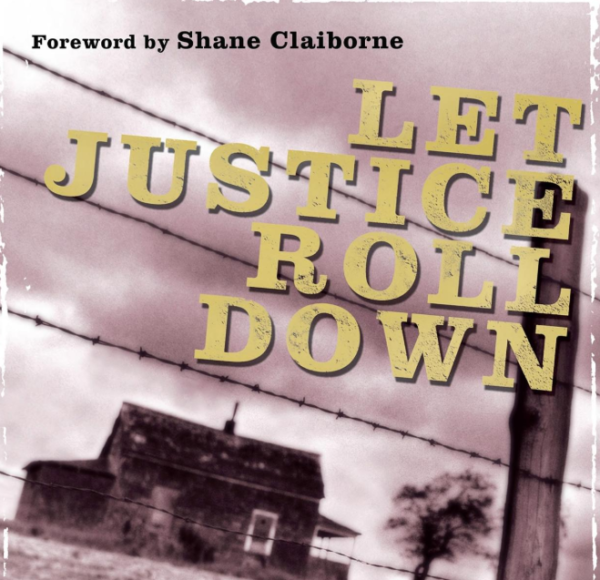
Today a copy of John Perkins’ 1976 autobiography, Let Justice Roll Down, arrived in my mail box as a gift from a friend. I looked for this book as a part of my research into John MacArthur’s claim that he and Perkins traveled to Memphis on the night Martin Luther King, Jr. was assassinated. I reported the results of my research and my interview with John Perkins’ daughter in a prior post.

In this book, Perkins mentions the support he received from John MacArthur’s father but doesn’t mention anything about going with John MacArthur to Memphis on the night of MLK’s death. I think that would be a story I would include if it had happened to me.

Social Justice

What is striking about this book is Perkins’ commitment to social justice. I say it is striking because Perkins has declined to speak on the record about the MacArthur story, choosing instead to allow his daughter to speak for him. Deborah Perkins has supported the story of Charles Evers who said he didn’t go to Memphis with MacArthur and Perkins that night.

Why is it striking to me? John MacArthur has gone on record as criticizing the social justice movement in the evangelical church. He promotes a critical statement on social justice which seems to cast doubt on much of what John Perkins has worked for.

As I read Perkins book, I came across these words:

The contribution of the civil rights movement to the black man’s struggle for justice and equality is one that is undeniably great. And this is so, because those who led the movement were committed men and women. They were committed to the cause. And to the struggle.

But how sad that so few individuals equally committed to Jesus Christ ever became part of that movement. For what all that political activity needed — and lacked — was spiritual input.  Even now, I do not understand why so many evangelicals find a sense of commitment to civil rights and to Jesus Christ an “either-or” proposition. (p. 99).

Perhaps, Rev. Perkins should ask his friend John MacArthur why so many evangelicals can’t walk the gospel and chew social justice gum at the same time. Or maybe John Perkins could help MacArthur understand his point of view.

Later in the book, Perkins wrote about the ostracism his children experienced in the all white schools of Mendenhall, MS. No Christian leaders, parents, or students spoke up to support them. He wrote:

I had to just watch. It hurt. The question kept popping up inside me: Does the gospel  — that is, the gospel as we presently preach it — have within itself the power to deal with racial attitudes? The thing that hit me was that the supposed presence of the gospel was simply not effective in terms of human relations. If evangelism is truly on the side of God and His love, then it should never allow itself to look like it’s on the side of a bigot-producing system. (p. 108).

I know which side I want to be on. To be fair, I believe most people want to be on the right side. However, I invite anti-social justice warriors to ask themselves why Perkins’ question is just as relevant in 2019 as it was in 1976.

Gospel for Asia Asks Donors to Give Back Settlement Money

After settling the $37-million fraud lawsuit with new board member Garland Murphy, Gospel for Asia now wants donors to regift their settlement funds back to Gospel for Asia. According to an appeal letter sent to me by a former donor, GFA is spending promotional money in an attempt to recapture their losses. Take a look:

This isn’t the first time GFA has attempted to collect these funds from former donors.

Where are the audits?

In the first image above, GFA boasts about their clean annual audits. Prospective donors should know that GFA refuses to release those audits to the public. One of the initial red flags about GFA came from the last publicly available audit. In that audit, GFA said the nearly $20-million to complete their Wills Point, TX headquarters in 2013 came from an anonymous donor.  However, now we know that those funds actually came from donor funds given to Believers’ Church in India as a related party transaction. GFA acknowledged this to the Evangelical Council for Financial Accountability which was one of the reasons for GFA’s expulsion from that group.

Since that time, GFA has kept their audits in house. Why should we believe them? GFA told the world the 2012-2013 audit was clean and accurate. Trust has to be earned and GFA has not shown any ability to step into the light. They do not answer questions about these audits, their loss of charity registration in India or their practices in Believers’ Church. It long past time for GFA to address these issues for the sake of the mission they claim to uphold.