Like some Ukulele sometimes? Gotta check out Julia Nunes. Never heard of her? You will.
What?
A [retired] college psychology professor's observations about public policy, mental health, sexual identity, and religious issues
Like some Ukulele sometimes? Gotta check out Julia Nunes. Never heard of her? You will.
What?
On February 3-4, I attended various meetings associated with the National Prayer Breakfast. By invitation of Bob Hunter and the various hosts, I was able to attend the African Prayer Breakfast, the International Luncheon and a dinner hosted by a group of people who put on prayer breakfast meetings in the western US. On the day of the prayer breakfast, I was allowed to watch the proceedings in the African Suite. One of the highlights of my visit was the opportunity to meet and interview Doug Coe which was published yesterday by Christianity Today.
The 2010 National Prayer Breakfast African Breakfast was held at 8:00am on Wednesday, February 3. The formal invitation was extended by Rep. John Boozman (R-AK). Andrew Marin also attended the meeting along about 300 invited guests, mostly from Africa, or the African diplomatic corps in Washington DC. The purpose of the breakfast was printed on a card at each table.
Purpose of this Breakfast:
To provide a unique gathering to advance three principles:
- To communicate the power of small groups that meet regularly around the teachings of Jesus of Nazareth.
- To create an environment of dialog in order to help create lasting relationships.
- To follow the Acts 2:42 model to hear the disciples’ teachings and fellowship, to eat together, and to pray.
The value of a small group:
With the Spirit of Jesus at the center, this ancient idea of gathering together meets a long-felt spiritual need of men and women at all levels of society in our modern world. People find acceptance, understanding, confidence, and hope for the future through a deepening relationship with God and in discovering the secret of true brotherhood with their fellow men and women. The primary goal of a small group is to build trust, fellowship, and closer bonds of friendship through the life and teachings of Jesus of Nazareth.
“Where two or three are gathered together in my name, there am I in the midst of them.” Matthew 18:20
The African Breakfast featured an array of religious and political figures from around the continent. Rep. John Boozman opened by welcoming the crowd on behalf of the Congress. I will have more to say about various presentations in another post. For now I want to list each event and the speakers.
African Breakfast – This event featured Rwanda’s Minister of Education, Charles Murigande, as the keynote speaker. He told his story of moving from a Howard University professor back to his homeland of Rwanda as the holocaust was taking place. Andrew Marin provided his thoughts about the presentation on his blog. The opening prayer was delivered Sophie Boyoya (Burundi), with an Old Testament reading delivered by Mouloud Zaid (Western Sahara), a New Testament reading by Antonio Sumbana (Mozambique) and short speech on the importance of small group prayer meetings by Dr. Inonge Mbikusita-Lewanika (Zambia).
International Luncheon – The invitation for this event came from Senators Amy Klobuchar and Johnny Isakson, co-chairs of the National Prayer Breakfast. The luncheon was described as
A luncheon for international guests and the Diplomatic Corps will be held at the Hilton Washington in the International Ballroom on Wednesday, February 3, 2010…This luncheon is the first official event for our international guests attending the 58th National Prayer Breakfast.
Former Ohio Representative and current Ambassador to the United Nations Agencies for Food and Agriculture, Tony Hall, welcomed the audience and led the opening prayer. The speakers for the luncheon were Yuli-Yoel Edelstein (Israel), Rajai Muasher (Jordan), Grace Pinto (India) and Andrey Makarov (Russia). Mr. Edelstein is Minister of Public Affairs and the Diaspora in Israel and noted that a prayer breakfast small group meets in the Knesset. Mr. Muasher gave what sounded like a political speech, specifying his belief that peace in the Middle East would come in exchange for land. Moving from the political, Ms. Pinto described her large religious school in India. I had to leave during Mr. Makarov’s speech in order to meet Doug Coe.
Rounding out the day, I attended a dinner of representatives from the Pacific Northwest and Rocky Mountain region. Hawaiian Senator Daniel Akaka moderated the event and introductory speeches were given by Rev. Richard Foth, and Chaadi Massaad from Lebanon. Gen. Mick Kicklighter was the keynote speaker with The Shack author, Paul Young giving the closing prayer.
The diversity of speakers and topics was impressive, with a hint of what I was to learn in my meetings with various Prayer Breakfast leaders. For instance, one speaker said he was a Muslim follower of Jesus. He told the crowd that Christians do not own Jesus. While I think different people mean different things by this statement, it appears that changing religious labels is not a requirement to be a follower of Jesus in this movement. As noted in yesterday’s post, the Prayer Breakfast movement puts a focus on what they called, “the main thing” – which is loving God and one’s neighbor.
More to come.
Last year and early this year, as a component of reporting on Uganda’s Anti-Homosexuality Bill, I wrote a bit about the Fellowship Foundation. Author Jeff Sharlet reported in November of last year that the main movers of the Ugandan proposal were associated with the Fellowship. As the matter unfolded, it has become clear that those behind the bill are associated with the Fellowship, but outside of Uganda, many other Fellowship associates oppose the bill. In particular, former Ford and Carter administration official, Bob Hunter offered vigorous public opposition on behalf of the Fellowship. To get the context, Jeff Sharlet’s guest post here on the subject is well worth reviewing.
The signature event associated with the Fellowship Foundation is the National Prayer Breakfast. The Fellowship organizes the event for the Congress with the President sometimes taking an active role in inviting guests from around the world. Held the first week of February, speculation was high in January about who would attend from Uganda. In relationship to my reporting on Uganda, I was invited to come to the National Prayer Breakfast to learn more about the event and the group behind it.
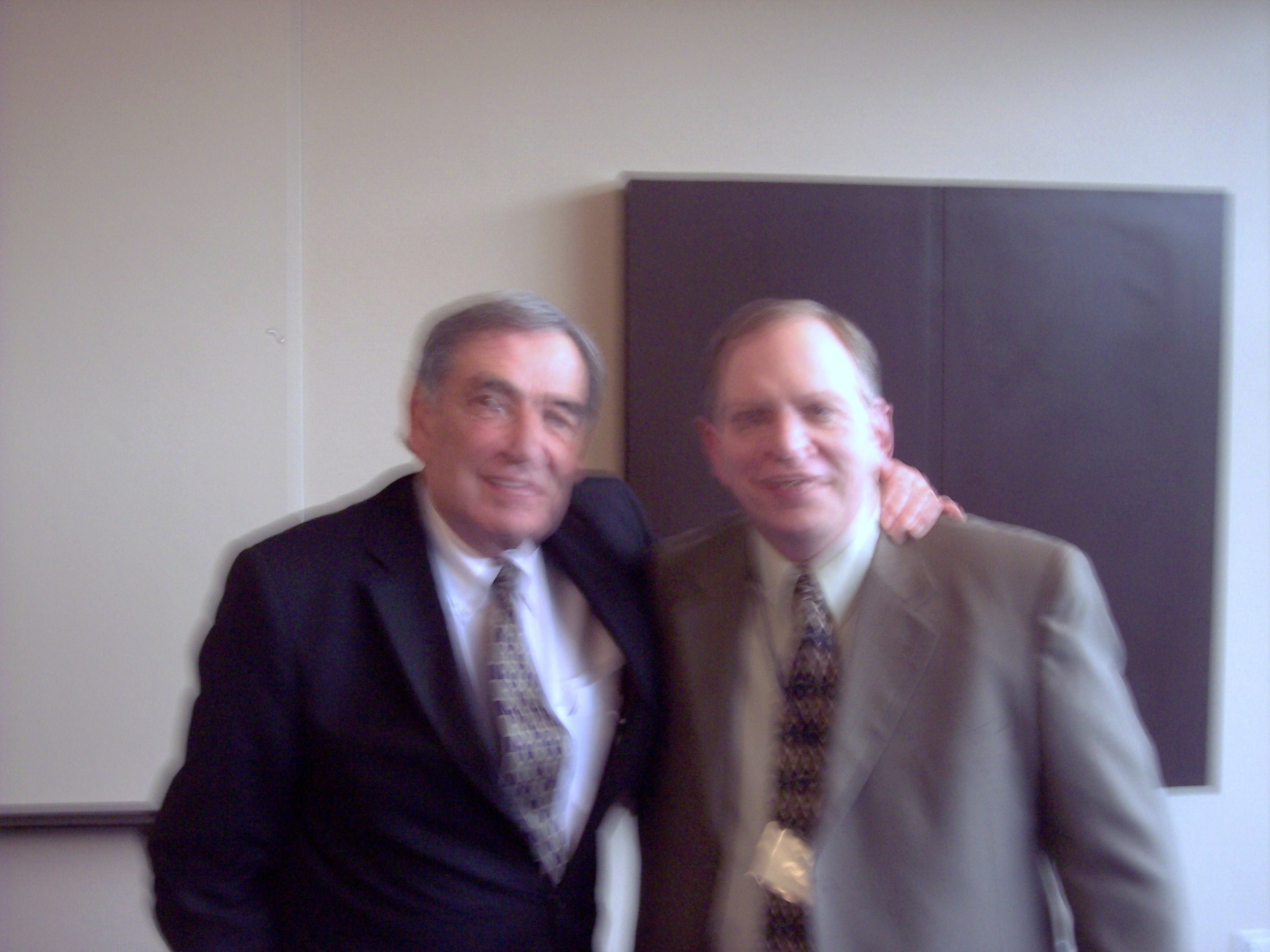 As an aspect of that visit, I was given a rare opportunity to sit down with spiritual leader of the Fellowship, Doug Coe. He grants few interviews, in fact, I only know of a handful, but he was glad to affirm to me that Uganda’s Anti-Homosexuality Bill was completely inconsistent with his vision for the Fellowship. Today, Christianity Today published the rest of the interview on their webite.
Over the next week or so, I will be reporting more on my visit to the National Prayer Breakfast. In this post, I want to begin by providing the talking points for a meeting where delegates from Africa were given information about the essential aspects of the National Prayer Breakfast work. In the legislatures of many nations, Fellowship groups conduct prayer breakfast meetings with similar aims as the US version. What follows is a document used to explain the Fellowship at an African gathering at this year’s event.
Eight Core Aspects of the vision and methods – the National Prayer Breakfast work:
- Based on Long Term Relationships: There are a circle of friends connected with this that go back several decades in some cases. Sometimes we simply call ourselves the fellowship or a family of friends. Family refers to the nature of relationships and friends speaks to the quality of our relationships.
- It’s a Wide Vision but grounded in Small Groups: It’s world-wide – we have members coming from very many different nations – it’s a very wide vision – but at the same time the whole thing is composed of friends gathering regularly in small groups for fellowship and to pray for their nations, their leaders and the leaders of the world.
- We focus on Jesus as the Common Ground: Any movement needs to have a strong ideal of shared values holding its members together. Many initiatives that try to promote unity across religious divides – can often end up with the ‘lowest common denominator’ when trying to create common ground. We are seeking the highest common denominator and so we reference our core values and methods to the principles, precepts and person of Jesus.
- We work across all that is dividing humanity: Nearly all of the conflicts and wars in the world today are being fought because of religious or ideological difference and ethnic differences. And part of the vision of our family of friends – is to raise up a movement of people who can cross these divides – who can ‘stand in the gap‘ – who can love ‘ the enemy.’
- It’s also call for Personal Transformation: A personal transformation – by Divine influence. All of us are works in progress… we experience changes in ourselves as we follow this Way of Jesus. And this happens the more we reflect His thinking, His way of speaking these actions – his love. The hope for the transformation of society – lies with transformed individuals.
- It’s about faith for a Better World: As human beings making up the family of nations in the world – we can do much better than what we have done so far. We can do better than this. We need to articulate and communicate a vision that is big and inspiring enough for people to buy into with whole-hearted, life-long commitment. A vision for a new way of living, this is what Jesus’ concept of the kingdom of God was all about. The world in its present state is not at all in line with the ideals of God’s Kingdom. That is, it is not operating by the values of God. This is why we see wars, injustice, poverty, crime and so forth.
- We Focus on the Essentials: By the time of Jesus – in his religion there were over 600 commandments. Jesus boiled them down to two. He said “Love God with all you heart, mind and should and Love your neighbor as yourself.” This he said was the Sum of all…..the other commandments. The sum of the law and the prophets. This was the greatest commandments. The main thing. And the main thing to keep the main thing the main thing.
- Finally – we work with Leaders but only have one leader that we give our lives to and that is Jesus: One of the earlier followers of Jesus – Paul was given a special mission: “This man is my chosen instrument to take my name…before the Gentiles and their kings….Acts 9:15,” This group of friends has helped to carry on this mission in regards the “king” – or other leaders of our world – who hold enormous influence – for better or worse – over vast numbers of people including billion of the poor – “the least of these” for whom Jesus has a special concern.
Number 7 echoes what Coe said during the interview:
Coe said that Lincoln was always faithful to go to church, but never joined a church. When asked why he stayed unaligned, President Lincoln replied, “When I find that church which has as its only creed ‘to love God with all its heart, mind, soul and strength,’ I will gladly join.” Coe seems to want the Fellowship to be the kind of group Lincoln could join.
For now, let me note that Coe rarely speaks in public and rarely takes public positions on issues. He was willing to do so in order to say that the Anti-Homosexuality Bill was inconsistent with his vision of following Jesus.
I am very interested in observations and dialogue regarding the interview and the summary points above. There were many more questions I will ask Mr. Coe if given the opportunity. I suspect this will have an interest to many outside the Ugandan anti-gay bill so I hope the discussion will not be limited to it.
I just read this post (The meme that will not die) at the Moderate Voice referring to questions about the sexual orientation of Obama’s Supreme Court nominee, Elena Kagan, and my reaction is in the title of this post – Who cares?
I don’t. I guess the 24-7 news cycle drives a lot of “news” which is really just curiosity about the private business of famous people. I see it as reporters and pundits playing out their dispositional attributions about the vague or unknown. In social psych class (which is now all over but the shouting – no, wait, I hear shouting), I teach about the fundamental attribution error. By that, social psychologists refer to the tendency among those in individualist societies (read: the U.S.) to assume observed behavior is due to personality traits of the behaving person (dispositional attributions) as opposed to the situation within which the behavior is occurring. So when some learn of a middle aged woman who is not dating a man and is not married, they might make an attribution about her sexuality, rather than her situation or other circumstances of life. Making sense of what others do is one of the fundamental cognitive jobs of humans, even though we are often incorrect, thanks, in part, to the bias toward dispositional attributions. When comes to our own behavior, we are often quick to see the role of the situation (“Lord, it was the woman you gave me”; “if only people knew what I had to put up with”), but when it comes to other people, we are not as likely to cut them situational slack.
In any case, about Ms. Kagan, I don’t care. Nothing in my theological outlook requires it; I don’t think what excites her neurons will be of overwhelming impact in her legal decision making. I am much more interested in how her neurons conspire to inform her about the role of Supreme Court judge (interpret, not make law). And you know, on the issue of qualifications, conservative Ken Starr thinks she is a pretty bright person. Ken Starr, Baylor University’s incoming president, is no liberal.
Am I wrong?
UPDATE: Rekers continues to deny the claims of JoVanni Roman and says he is resigning to fight those claims.
NARTH Responds to the
Recent Media Coverage of Dr. George Rekers
“I am immediately resigning my membership in NARTH to allow myself the time necessary to fight the false media reports that have been made against me. With the assistance of a defamation attorney, I will fight these false reports because I have not engaged in any homosexual behavior whatsoever. I am not gay and never have been.” –George A. Rekers, Ph.D.
NARTH has accepted Dr. Rekers’ resignation and would hope that the legal process will sufficiently clarify the questions that have arisen in this unfortunate situation. We express our sincere sympathy to all individuals, regardless of their perspective, who have been injured by these events. We also wish to reiterate our traditional position that these personal controversies do not change the scientific data, nor do they detract from the important work of NARTH. NARTH continues to support scientific research, and to value client autonomy, client self-determination and client diversity.
That is what TPM is reporting.
George Rekers resigned this morning from the board of NARTH, the National Association for Research and Therapy of Homosexuality, amid a gay escort scandal.
NARTH vice president of operations David Pruden tells TPMmuckraker that Rekers first offered his resignation last Thursday, and officially resigned today.
NARTH is a group that promotes the idea that homosexuality can, and should, be cured.
Pruden also denied a report in the Miami New Times that NARTH had been involved in helping Rekers respond to the media.
“NARTH has never had any role in advising Dr. Rekers except to suggest that if he is innocent he needs to get a good lawyer,” Pruden said in an email. “He has friends who are members of NARTH and they are free to talk with, advise, and needless to say, they are free to help him in any way they might select.”
“NARTH as an organization has taken no official role in this other than asking him to explain to us what has happened and in accepting his resignation,” he said.
Apparently, at least some of Rekers’ work is going with him. The link to his controversial work opposing gay adoption is gone from the NARTH website as of this morning. NARTH’s Dave Pruden told me that NARTH did not agree with Rekers that Native Americans could be excluded from adoption based on high levels of substance abuse and other issues. As I reported last week, Rekers told the Florida court in the Gill adoption case that — using the same logic as he did in testifying against gays — he believes the rationale could be used to exclude Native Americans. As of now, Rekers remains on the NARTH Advisory Board.
UPDATE: He is now missing from the NARTH Advisory Board page as well…(May 13)